


If you are researching gutter leaf guard installation cost, the first thing to know is that there is no single fixed price. The final cost depends on the type of guard you choose, how much guttering needs to be covered, the height and access to the property, and whether the gutters need cleaning or repairs before anything can be fitted. In the UK, simple retail products such as mesh guards, brush inserts and clip-fit systems are widely available, while specialist fine-mesh systems sit at the higher end of the market.
For many homeowners, the real cost is not just the guard itself. Installers often need to inspect the guttering first, clear out leaves and moss, check the downpipe outlets, and sometimes repair sagging sections or leaking joints before fitting the new protection. That is why comparing like-for-like quotes is important. A cheaper quote may only cover a basic product, while another may include cleaning, prep work and fitting to a better standard.
What Are Gutter Leaf Guards?
Gutter leaf guards are protective products fitted over, into or around the gutter channel to reduce leaves, moss and debris collecting inside the system. Their purpose is to keep water flowing more freely and cut down how often the gutters need clearing. Common UK product types include clip-fit plastic guards, mesh rolls, brush-style inserts and outlet guards, while specialist suppliers also offer finer stainless steel micro-mesh systems.
Typical Types of Gutter Guards
In the UK market, the most common types you will come across are:
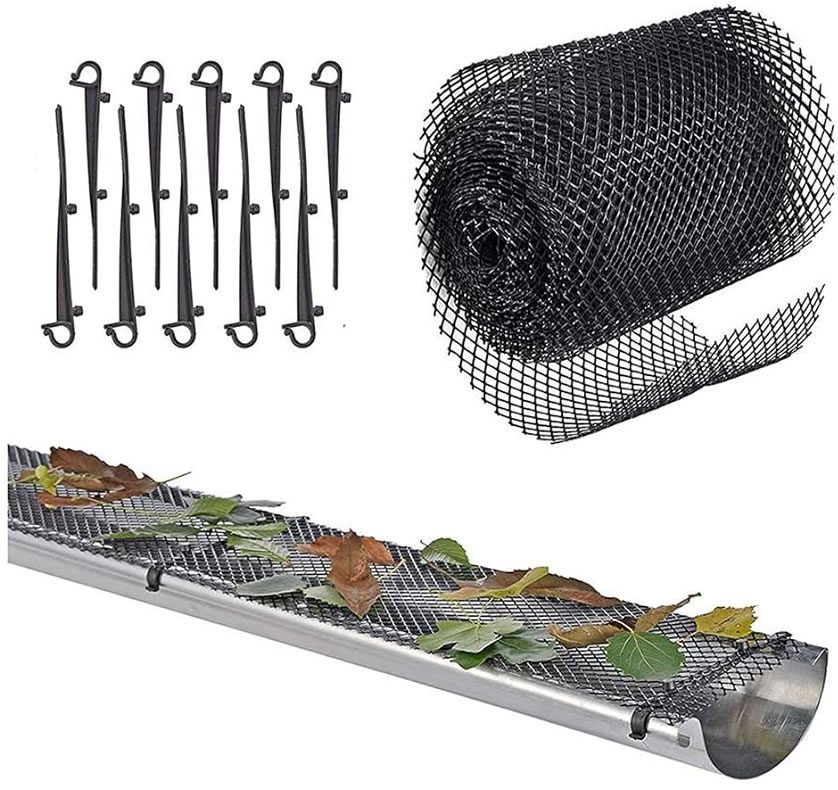
Mesh gutter guards
These sit over the top of the gutter and are designed to let rainwater through while blocking larger debris. They are widely sold by DIY retailers and trade merchants.
Brush gutter guards
These sit inside the gutter channel and help prevent leaves from settling and compacting. They are a familiar retail option and are often sold in 4m or multi-pack lengths.
Clip-fit plastic guards
These are rigid sections that clip into common gutter profiles. FloPlast’s FloGuard system is a good example of a standard UK clip-fit product for PVC gutters in the 100mm to 115mm range.
Outlet or balloon guards
These protect the downpipe opening rather than the full gutter run. They can be useful where the main blockage point is the outlet.
Fine-mesh and micro-mesh systems
These are positioned more as premium products. Raptor, for example, describes mesh guards as the most common type in the UK and markets stainless steel micro-mesh as a finer option that blocks smaller debris.
Gutter Leaf Guard Brands You May Come Across
The UK retail and trade market currently includes familiar names such as FloPlast and Aquaflow, while specialist suppliers promote products such as Raptor micro-mesh systems. FloPlast leaf protection products are listed by Screwfix and Wickes, Aquaflow gutter guard is listed by Toolstation, and B&Q also lists a mix of branded and generic gutter brush and mesh products.
Gutter Guard Types and Example Brands
| Type | How it works | Example brands / products | Typical material | Best for |
|---|---|---|---|---|
| Clip-fit guard | Clips over the gutter opening | FloPlast FloGuard | Polypropylene | Standard domestic uPVC gutters |
| Mesh roll guard | Sits across the top of the gutter | Aquaflow 5m Gutter Guard, generic mesh products at B&Q | Plastic mesh | Budget-conscious installs |
| Brush guard | Sits inside the gutter channel | FloPlast gutter brushes, generic gutter brush products | Plastic bristles with metal core | Homes with larger leaf debris |
| Outlet / balloon guard | Fits at the downpipe opening | FloPlast Balloon Leaf Protection System | Polypropylene | Outlet blockages |
| Micro-mesh guard | Fine screen blocks smaller debris | Raptor micro-mesh | Stainless steel mesh | Higher-spec installs |
How Much Does Gutter Leaf Guard Installation Cost?
For a simple DIY-style product on a short run of guttering, the supply cost can be quite low. Current UK retail listings show examples such as FloPlast clip-fit guards at around the low-teens for a 10-pack, Aquaflow gutter guard at around £9.99 for 5m, and B&Q mesh or brush options typically in the low-teens as well.
Once professional fitting is involved, the total rises because labour, access, cleaning and prep work matter more than the basic product cost. Current UK guttering cost guides show that gutter cleaning, repair and replacement costs vary significantly by property and access, and standard gutter replacement often lands around £40 to £50 per metre for uPVC supply and fit. That gives useful context for why fitted gutter guard quotes vary so much between properties.
Practical homeowner budget guide
These are sensible working estimates for UK homeowners based on current retail product pricing and wider 2025–2026 UK guttering cost guides. They are best used as budgeting ranges rather than fixed tariffs.
| Job type | Typical budget guide |
|---|---|
| Outlet guard only | £80 – £180 |
| Small section of basic guard fitted | £150 – £300 |
| Garage, porch or extension | £180 – £350 |
| Typical semi-detached house | £350 – £700 |
| Larger detached house | £500 – £950+ |
| Premium micro-mesh style install | £700+ |
What Affects the Price?
1. The type of guard
A simple outlet guard or budget mesh product is cheaper than a higher-spec micro-mesh system. Product design and material make a real difference.
2. How much guttering needs covering
A short front elevation is obviously cheaper than a full detached house with several rooflines, extensions and garages. Wider coverage means more material and more fitting time. This is also why general gutter replacement guides are often priced per metre.
3. Height and access
Two-storey homes, conservatories, awkward side returns and difficult access all tend to push costs up because they add labour time and equipment needs. UK guttering labour guides consistently point to access as a major cost driver.
4. Condition of the existing guttering
If the gutters are leaking, sagging or clogged with moss, installers may recommend prep work first. There is little point fitting a guard to a gutter that is already draining badly.
5. Whether cleaning is included
Cleaning is often needed before installation so debris is not trapped underneath the new protection system. That can add noticeably to the total quote.
What the Installation Process Is Usually Like
For most homes, professional gutter leaf guard installation follows a fairly simple sequence.
Step 1: Inspection
The installer checks the gutter profile, measures the lengths, looks at access, and assesses whether the current system is suitable for a guard. They may also check for leaks, loose brackets and blocked outlets. This reflects the same inspection-first logic used in wider guttering work.
Step 2: Cleaning and prep
Leaves, moss and sludge are removed from the gutter channel. If needed, minor repairs or realignment are carried out first. This is one of the most common hidden extras in leaf guard quotes.
Step 3: Choosing the right guard type
The installer selects a suitable system based on the gutter size, surrounding trees, debris type and budget. Standard PVC gutters may suit clip-fit systems such as FloPlast FloGuard, while some homes may suit brush or mesh inserts better.
Step 4: Fitting the guard
The chosen guard is clipped, laid or fixed into place. Some systems are easy-fit and screw-free, while others are more specialist. FloPlast’s product information, for example, describes its leaf protection system as an easy-fit clip-together design with no screws required.
Step 5: Final water-flow check
A good installer should make sure the system is sitting properly, outlets are clear and water can still flow away without restriction. Product pages for standard UK guards also emphasise maintaining non-restrictive rainwater flow.
DIY vs Professional Installation
DIY can make sense for a very low, simple and easy-to-reach section of guttering where the existing gutter is already clean and in good condition. That is one reason DIY stores and trade retailers stock clip-fit, mesh and brush products for home use.
For a lot of homes, though, paying a professional is the better option. A fitter can check whether the current guttering is worth protecting first, deal with cleaning and small repairs, and install the right product for the profile. On taller or awkward properties, this is also the safer choice.
Is It Worth Installing Gutter Leaf Guards?
For homes near trees, or properties that need frequent gutter clearing, gutter guards can be worthwhile. They may reduce the volume of leaves getting into the channel, lower maintenance frequency and help reduce overflowing gutters. But they are not magic. Some homes still need occasional checks, and the wrong guard on the wrong gutter can be poor value. That is why it is worth comparing quotes rather than buying the cheapest product blindly.
FAQs
How much does gutter leaf guard installation cost in the UK?
A small fitted job may start at around £150 to £300, while a typical semi-detached house often falls around £350 to £700. Larger houses, difficult access and premium micro-mesh systems can push the price higher. These are budgeting ranges, not fixed tariffs.
What is the cheapest type of gutter guard?
Outlet guards, basic mesh rolls and simple brush products are usually among the cheapest options in the UK retail market. Current B&Q, Screwfix and Toolstation listings support that pattern.
Which gutter guard type is most common?
Mesh guards are commonly sold in UK retail, and Raptor’s product information explicitly says mesh gutter guards are the most common type in the UK. Brush and clip-fit plastic guards are also very common in DIY and trade outlets.
Do gutters need cleaning before guards are fitted?
Usually yes. If debris is already sitting in the gutter, most installers will recommend cleaning it out first so the new guard system can work properly.
Are gutter guards maintenance-free?
Not completely. They can reduce cleaning frequency, but most systems still need occasional checks, especially in areas with heavy moss or a lot of nearby trees.
Are premium micro-mesh systems worth more money?
They can be, especially where fine debris is a problem or the homeowner wants a more robust product. Specialist suppliers position micro-mesh as a higher-protection option than standard mesh.